
Government Calls for Engineering Transformation to Drive Kenya’s Infrastructure Development NAIVASHA, 12 August 2026
The Government has called for greater collaboration with the engineering profession to accelerate infrastructure development, embrace innovation and develop sustainable solutions capable of responding to Kenya’s growing population and changing economic needs.
Cabinet Secretary for Roads and Transport, Hon. Davis Chirchir, made the call today when he officially opened the 5th Annual Conference of the Association of Consulting Engineers of Kenya (ACEK) at Sawela Lodge, Naivasha.
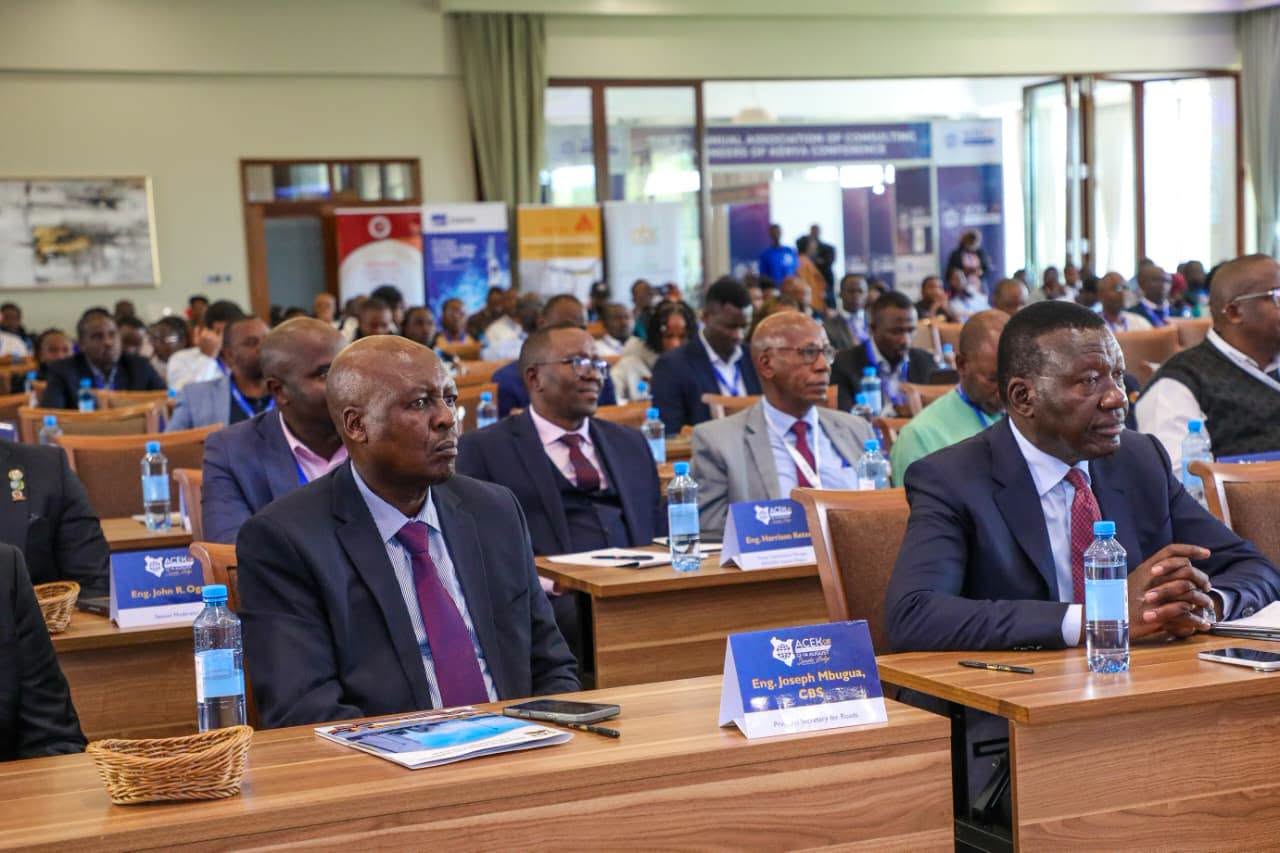
The three-day conference brings together policymakers, consulting engineers, financiers, development partners, academia and the private sector to deliberate on the role of engineering in advancing sustainable development.
The CS said Kenya’s population is projected to reach approximately 85 million by 2050, increasing demand for roads, water, energy and digital connectivity. He noted that meeting this demand will require the country to scale up infrastructure investment from the current 4–5 per cent of GDP to more than 7 per cent.
He said the changing global financing environment also requires Kenya to rethink how infrastructure projects are developed and financed, with greater emphasis on Public-Private Partnerships, innovative financing and projects capable of attracting commercial and institutional capital.
“Transforming Kenya into a first-world economy will demand your expertise, your innovation, and above all, an unwavering commitment to excellence,” the CS said.
He cited the Rironi–Nakuru–Mau Summit Highway, the extension of the Standard Gauge Railway from Naivasha to Kisumu and Malaba, the 740-kilometre Horn of Africa Gateway Development Project, the 536-kilometre Rural Roads for Economic Development Project and the 815-kilometre Lake Victoria Basin Development Project among major infrastructure investments creating opportunities for engineering expertise and private sector participation.
The Government is also pursuing the modernisation of airports and seaports as part of efforts to strengthen Kenya’s transport infrastructure and competitiveness.
Hon. Chirchir challenged the engineering profession to embrace three key transformations: from traditional to digital, from carbon-heavy to green, and from national to regional.
He noted that technologies such as Artificial Intelligence-assisted design, digital twins and IoT-enabled infrastructure monitoring are already changing how infrastructure is designed, constructed and maintained, while green engineering and sustainable materials are becoming increasingly important in attracting investment.
The CS further urged Kenyan engineering firms to position themselves to benefit from opportunities emerging under the African Continental Free Trade Area, noting that Kenya’s strategic position within regional transport and trade corridors provides an opportunity for local firms to expand their expertise across the continent.
At the national level, the Government’s infrastructure agenda includes plans to dual 2,500 kilometres of highways and tarmac 28,000 kilometres of roads, alongside expansion of the SGR and modernisation of seaports and airports.
Mr. Chirchir said these priorities are supported by efforts to mobilise long-term financing through the National Infrastructure Fund, while reducing pressure on Government borrowing.
He also reaffirmed the Government’s commitment to strengthening local capacity and promoting meaningful participation of Kenyan enterprises in infrastructure development. He urged the engineering profession to engage with the Local Content Bill, 2025, which seeks to strengthen local participation and ensure that infrastructure investments generate wider economic opportunities.
The Government is further working with ACEK and the Engineers Board of Kenya to expand opportunities for young engineers through graduate attachment programmes, mentorship and exposure to active Government projects.
“Kenya has no shortage of infrastructure needs, and you have an important role to play in shaping, designing and building the infrastructure our country needs for generations to come,” the CS told early-career engineers.
The CS said the Government views the engineering profession as a strategic partner in Kenya’s development journey and called for continued collaboration to deliver infrastructure that is resilient, sustainable, innovative and responsive to the needs of a growing economy.
The conference provides a platform for stakeholders to develop practical solutions to infrastructure financing, digital transformation, quality assurance and the development of the next generation of engineering professionals.
The Ministry of Roads and Transport is a cornerstone of Kenya’s infrastructure development, driving investments that strengthen connectivity, facilitate trade, create economic opportunities and improve the lives of Kenyans.
Also present were Principal Secretary, Eng. Joseph Mbugua, ACEK President, Eng. Gabriel Jabong’o, IEK President, Eng. Harrison Keter, Reps of State Agencies , ACEK Council members; development partners, academia and consulting engineers.