
Government Proposes New Formula for Equitable Sharing of Road Maintenance Levy Fund Friday, 9th May 2026, Machakos County
The Government has proposed a new framework for sharing the Road Maintenance Levy Fund (RMLF), aimed at aligning road maintenance financing with constitutional requirements while strengthening support for both national and county road networks.
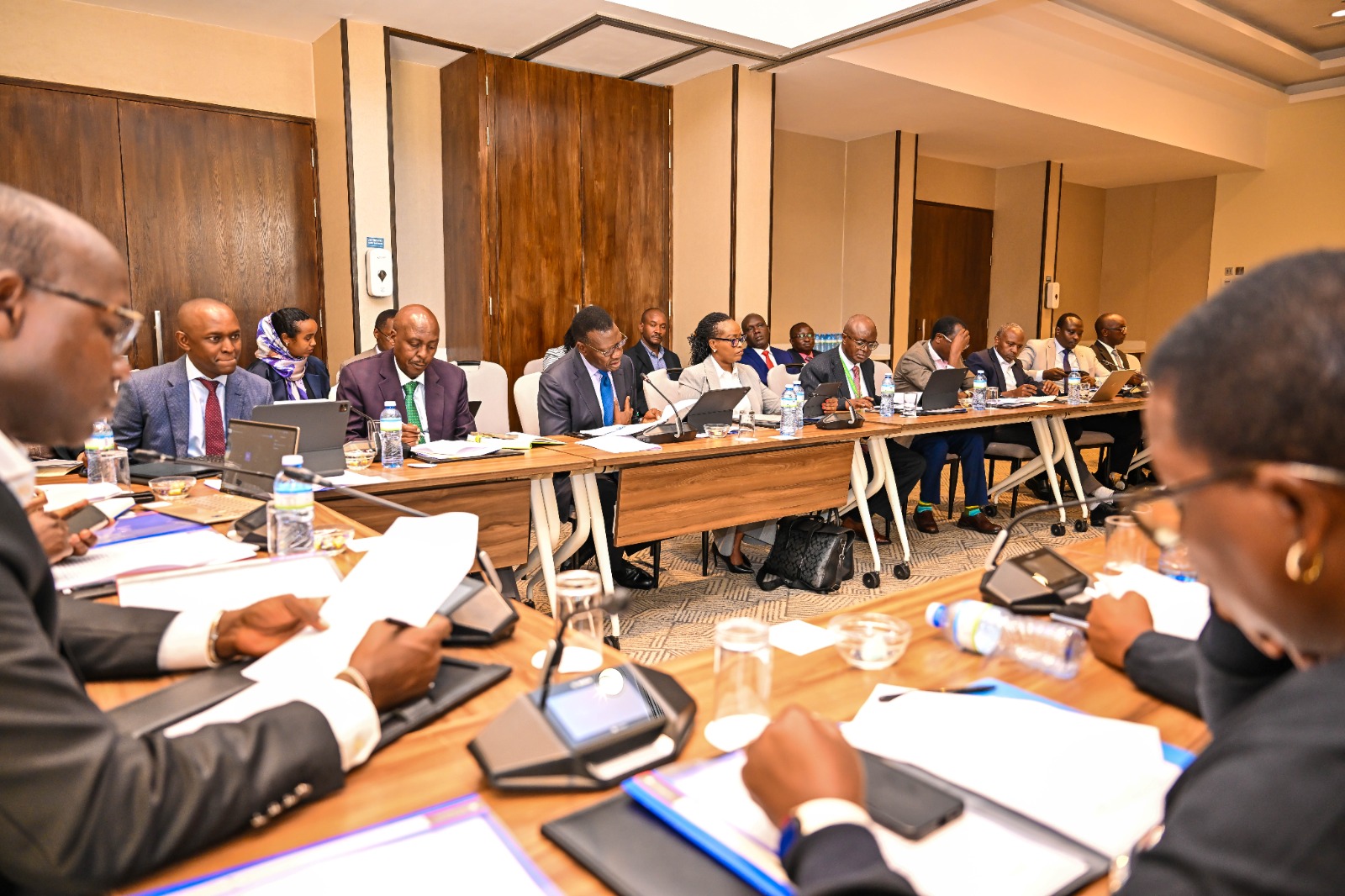
Appearing before the Senate Committee on Roads, Transportation and Housing chaired by Eddy Oketch, Cabinet Secretary for Roads and Transport Davis Chirchir said the proposed formula seeks to formally recognise county governments as beneficiaries of the fund in line with the Constitution and recent court decisions.
Under the proposed allocation formula, 84.98 per cent of the Road Maintenance Levy Fund would be directed to National Trunk Roads, while 15.02 per cent would be allocated to county governments through ring-fenced county roads maintenance accounts.
Based on projected collections of KSh70 billion, National Trunk Roads would receive KSh59.49 billion while county governments would receive KSh10.51 billion dedicated to maintenance and rehabilitation of county roads.
“The Ministry recommends that County Governments be expressly recognised as beneficiaries of the RMLF,” said CS Chirchir during the session.
The Ministry explained that the proposal follows the June 5, 2025 High Court ruling in the case of Issa Elanyi Chemao and Others v. National Assembly and Others, which questioned the legality of the current road levy distribution structure.
CS Chirchir noted that the Constitution clearly assigns road functions between the two levels of government.
“The Constitution recognises two categories of public roads — National Trunk Roads (Class S, A, B and C) and County Roads (Class D, E, F and G) — and assigns each to a distinct level of government under Article 186 read together with the Fourth Schedule,” he stated.
The Ministry further informed Senators that county roads account for approximately 76 per cent of Kenya’s road network by length, although national trunk roads carry the bulk of traffic volumes and regional trade movements.
To guide the proposed allocations, the Ministry developed a scientific two-tier formula based on road length, traffic volume, road condition and road network classification.
Traffic volume was assigned the highest weighting at 45 per cent due to its impact on pavement wear and maintenance needs, while road network type and road length were each assigned 25 per cent. Road condition accounted for the remaining 5 per cent.
Explaining the county allocation, CS Chirchir stated that the proposed share reflects engineering and maintenance realities for lower-class roads predominantly managed by counties.
He added that the framework seeks to balance constitutional obligations while ensuring the National Trunk Road network remains adequately funded to support economic growth and regional connectivity.
To strengthen accountability and safeguard proper utilisation of the funds, the Ministry proposed that county allocations be deposited into dedicated, ring-fenced county roads maintenance accounts separate from County Revenue Funds.
The Cabinet Secretary further noted that the Kenya Roads Board will continue to exercise oversight through technical, financial and performance audits as provided for under the Kenya Roads Board Act.
CS Chirchir was accompanied by Principal Secretary Eng. Joseph Mbugua, Kenya Urban Roads Authority Director General Eng. Silas Kinoti, and other senior officials from the roads sector.